In today’s fast-paced digital world, staying ahead of new innovation is more important than ever for modern businesses. Keeping up with the latest digital transformation helps companies grow and find brand-new opportunities in a competitive market. Embracing a major ftasiaeconomy tech trend allows smart organizations to completely update their software infrastructure, improve daily user experience, and build long-term success.
Are you completely ready to revolutionize your entire business strategy using cutting-edge tools? Finding the right technological advancement can instantly streamline your workflow automation and boost team collaboration overnight.
Understanding these modern cloud computing tools and smart data analytics is the ultimate key. Implementing a solid artificial intelligence framework ensures you scale efficiently while maintaining top-tier cybersecurity measures effortlessly.
What Is FTAsiaEconomy Tech Trend?
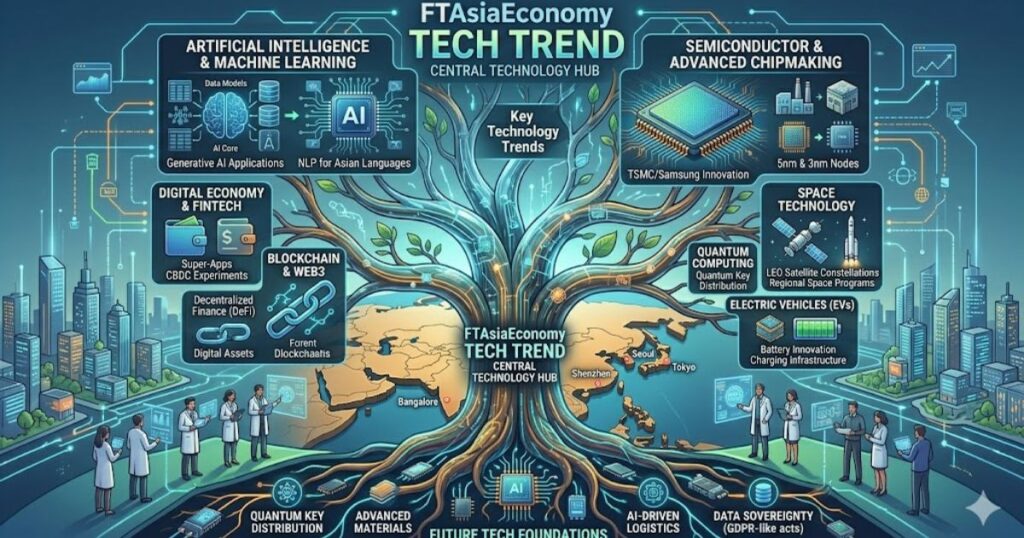
The rapidly growing FTAsiaEconomy tech trend represents the massive wave of digital innovation sweeping across the Asian continent right now. This structural shift focuses heavily on upgrading financial technology and building decentralized ecosystems to support a growing digital population.
Asian markets are completely revolutionizing how modern businesses handle global trade and scale their operations. Local governments are aggressively backing this technological advancement by building highly stable infrastructure, creating clear rules, and encouraging cross-border digital collaboration.
This unique economic shift combines localized mobile applications with highly integrated cloud computing environments. By embracing deep data analytics, companies across Asia are finding completely new ways to boost productivity and secure long-term market dominance.
Why FTAsiaEconomy Covers Emerging Technology Trends
Keeping a close eye on these shifts is absolutely essential for understanding global market dynamics today. Tracking these movements provides deep predictive analysis into which specific sectors will attract the most venture capital funding this year.
Evaluating these modern updates helps global organizations quickly implement highly efficient workflow automation strategies. Understanding these changes also allows businesses to upgrade their cybersecurity measures and safely expand into major international consumer markets.
Analyzing fresh data helps modern enterprises optimize their existing software infrastructure for better overall efficiency. It gives forward-thinking leaders a massive competitive edge by predicting major shifts in global consumer demand and behavior.
Key Tech Drivers in 2026
The entire landscape relies on specific core technologies to maintain its rapid momentum. The table below outlines the primary digital systems driving this economic growth.
| Technology Pillar | Main Business Focus | Primary Benefit |
| Artificial Intelligence | Smart agentic workflows | Automates complex multi-step financial processes |
| Blockchain Networks | Real-world asset tokenization | Provides fractional ownership of physical property |
| Stablecoin Systems | Cross-border trade settlement | Lowers business transaction costs by forty percent |
Major Industry Benefits
- Smart automation tools instantly streamline complex backend operations to save corporate teams valuable time.
- Advanced machine learning frameworks accurately predict shifting consumer habits to optimize production schedules.
- Secure digital asset platforms allow businesses to raise capital faster through compliant tokenization models.
- Modern telecommunication networks connect remote rural markets directly to large urban economic hubs seamlessly.
- Enhanced data privacy protocols protect sensitive customer information from sophisticated international cyber threats.
- Open software development kits encourage rapid open-source collaboration among diverse tech startups across Asia.
See more : Social Media Stuff EmbedTree: Complete Guide to Features, Benefits, and How It Works
Key Tech Trends Shaping Asia’s Economy
The economic landscape across Asia is experiencing a massive shift as businesses rapidly adopt advanced digital tools to maintain high growth. Integrating these modern solutions helps regional enterprises completely streamline their daily workflows, optimize resource allocation, and scale across international borders. By prioritizing a robust digital transformation, forward-thinking nations are building highly sustainable ecosystems that attract substantial venture capital while drastically improving overall industrial productivity.
Artificial Intelligence and Automation
In 2026, companies are moving away from simple experimentation to deploy highly sophisticated systems that handle complex corporate tasks independently.
- Implementing advanced machine learning algorithms allows large manufacturing plants to predict equipment failures before they happen and reduce operational downtime.
- Deploying smart agentic AI tools helps customer service teams resolve intricate client inquiries without requiring any direct human intervention.
- Using specialized predictive analysis models gives corporate leaders real-time insights to optimize their supply chains against global market disruptions.
- Integrating custom workflow automation software enables finance departments to process thousands of invoices in seconds with zero data entry errors.
FinTech and Digital Payments
Asia leads the world in transaction innovation by building deeply unified mobile networks that make transferring money incredibly simple.
- Utilizing regional QR code payment systems connects millions of small street vendors directly to the mainstream banking infrastructure effortlessly.
- Expanding cross-border digital wallets allows international tourists to pay for goods instantly without paying expensive currency conversion fees.
- Integrating secure embedded finance APIs into popular retail applications lets consumers access instant credit at the exact point of sale.
- Launching regulated central bank digital currencies helps local governments reduce transaction settlement times from several days to mere seconds.
Cloud Computing and Big Data
Modern enterprises are actively moving away from local legacy servers to highly scalable storage solutions to manage their information.
- Transitioning to a secure hybrid cloud infrastructure gives growing tech startups the flexibility to scale up computing power during peak traffic.
- Applying deep data analytics to massive consumer datasets helps regional e-commerce brands personalize product recommendations for every individual shopper.
- Implementing strict digital sovereignty frameworks ensures that sensitive citizen information remains stored safely inside national geographic borders.
- Using real-time cloud optimization software allows corporate IT managers to minimize energy consumption and lower monthly infrastructure bills significantly.
Blockchain and Cryptocurrency
The focus has shifted entirely toward practical business applications that verify ownership and secure high-value transactions on public ledgers.
- Leveraging decentralized smart contracts automates complex international trade agreements by releasing payments only when specific shipping conditions are met.
- Utilizing transparent real-world asset tokenization allows fractional ownership of commercial real estate, opening investment markets to everyday citizens.
- Deploying highly stable cryptographic protocols ensures that cross-border business payments remain completely secure against unauthorized third-party tampering.
- Integrating audited supply chain tracking networks helps global logistics firms verify the authenticity of pharmaceutical products across multiple countries.
Cybersecurity Innovations
As network architectures expand, organizations are heavily upgrading their defense perimeters to safeguard proprietary corporate data from advanced threats.
- Adopting a strict zero-trust architecture requires continuous verification for every single user device attempting to access private company files.
- Deploying automated threat intelligence platforms allows security operation centers to neutralize malware attacks before they breach the core network.
- Implementing advanced confidential computing environments protects highly sensitive data while it is actively being processed by third-party applications.
- Upgrading to post-quantum encryption standards safeguards long-term institutional records against the future code-breaking capabilities of quantum computers.
How FTAsiaEconomy Tech Trend Impacts Businesses
The rising FTAsiaEconomy tech trend fundamentally rewrites standard operating procedures for modern companies across global sectors. Successfully adapting to these sweeping industrial shifts helps corporate entities completely unlock fresh revenue channels, minimize wasteful spending, and scale their reach into highly lucrative international consumer landscapes.
| Focus Area | Core Technology Shift | Main Business Benefit |
| Supply Chain | Automated tracking networks | Cuts logistics delays by thirty percent |
| Asset Security | Zero-trust access frameworks | Stops internal database breaches entirely |
| User Experience | Deep behavioral analytics | Boosts digital conversion rates overnight |
This massive movement compels organizations to immediately abandon slow legacy methods for fast, connected software ecosystems. Integrating these advanced systems lets growing enterprises dramatically improve their operational efficiency, secure vital assets, and deliver incredible experiences to their global user base.
The Role of AI in Asia’s Economic Growth
Advanced machine learning frameworks are currently injecting billions of dollars into regional industries by optimizing production pipelines. Deploying smart predictive analysis allows manufacturers to slash systemic downtime, forecast changing material costs, and beat competitors to market.
- Smart automation software instantly streamlines repetitive data entry jobs to free up human talent.
- Customized natural language processing models translate regional dialects to unite diverse international business teams.
- Sophisticated fraud detection algorithms scan millions of transactions per second to block criminal activity.
- Automated inventory management systems monitor stock levels in real time to prevent product shortages.
- Deep algorithmic demand generation helps brands create highly targeted marketing campaigns with minimal spending.
- Intelligent energy grid optimization programs help large factories reduce daily electricity consumption by twenty percent.
Furthermore, the rapid deployment of autonomous agentic AI tools completely revolutionizes modern customer service departments. These intelligent systems quickly resolve highly complex client challenges without requiring continuous human oversight, lowering corporate overhead costs significantly while boosting overall brand loyalty.
Smart Cities and Digital Infrastructure Development
Metropolitan hubs are building massive internet of things sensor networks to manage public utilities more sustainably. Utilizing real-time urban digital twins allows local governments to simulate severe weather emergencies, control traffic congestion patterns, and protect critical citizen utility grids.
- Remote environmental monitoring systems check urban air quality levels to protect dense public populations.
- Integrated smart water management grids detect underground pipe leaks to prevent clean water waste.
- Connected intelligent traffic signals adjust timing intervals dynamically to eliminate daily commuter delays entirely.
- Automated drone surveillance flights monitor major public construction sites to ensure worker safety compliance.
- Centralized cloud data platforms allow municipal departments to share critical emergency information smoothly during crises.
- Public digital identity portals allow residents to securely access government services from mobile devices.
Building strong 5G connectivity networks across dense metropolitan areas forms the true backbone of modern industrial zones. This advanced layout provides the superfast speeds required to safely run autonomous transportation systems and coordinate connected emergency response fleets.
E-Commerce and Consumer Technology Trends
Online shopping landscapes are experiencing a structural shift away from search engines toward immediate, content-driven social apps. Modern consumer behavior heavily favors frictionless mobile shopping journeys that combine live video streams with fast, personalized checkout screens.
- Algorithmic social commerce channels let shoppers buy items directly inside short-form entertainment applications.
- Integrated buy now pay later services give retail consumers flexible financing choices at checkout.
- Immersive augmented reality tools let online buyers virtually try on clothes before placing orders.
- Automated predictive fulfillment software prepares fast-moving inventory before the customer even submits their purchase.
- Frictionless mobile checkout options remove unnecessary steps to make smartphone shopping completely effortless.
- Sustainable eco-friendly packaging options help brands connect deeply with environmentally conscious modern younger consumers.
Integrating flexible digital wallets and instant payment solutions has completely eliminated traditional cart abandonment problems for digital storefronts. Brands utilizing smart predictive recommendations can easily convert casual browsing into immediate impulse buys while maintaining highly reliable last-mile delivery tracking.
Frequently Asked Questions
Q1: What is the main focus of this new digital shift?
The ftasiaeconomy tech trend focuses heavily on upgrading financial systems, expanding smart automation, and scaling secure cloud infrastructure to drive regional industrial productivity.
Q2: How does this innovation help modern corporate entities?
Adopting the ftasiaeconomy tech trend allows modern businesses to instantly improve operational efficiency, automate complex data workflows, and secure valuable proprietary customer databases.
Q3: Which specific sectors are seeing the fastest digital growth?
The ftasiaeconomy tech trend primarily revolutionizes artificial intelligence deployment, decentralized blockchain payment networks, smart city logistics, and advanced mobile e-commerce platforms.
Q4: Why are regional governments supporting these modern updates?
Governments back the ftasiaeconomy tech trend to build highly stable digital infrastructure, encourage cross-border trade, and attract substantial international venture capital.
Q5: What role does machine learning play in this movement?
Under the ftasiaeconomy tech trend, machine learning models provide accurate predictive analysis to optimize supply chains and automate conversational customer support agents.