
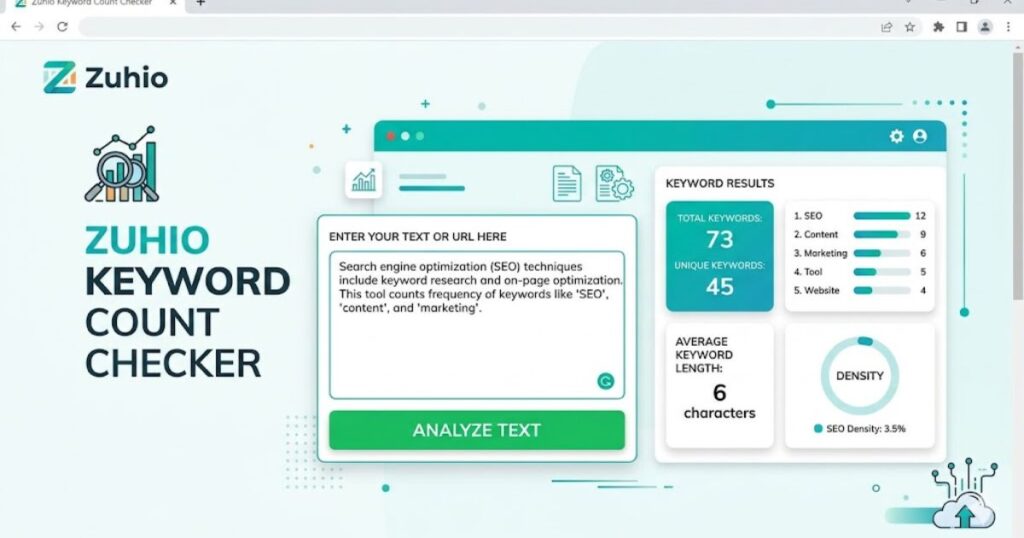
Writing content that ranks well requires a careful balance of value and optimization. If you want to master search engine visibility, keeping an eye on your search queries and overall lexical diversity is critical. That is where a specialized content optimization tool like the zuhio keyword count checker becomes essential for analyzing your text length and term frequency to ensure you strike the perfect balance for information retrieval algorithms.
Ever wonder why some digital content effortlessly dominates the search engine results pages while others completely vanish? It all comes down to satisfying the intent of the user through strategic information architecture and natural phrase matching. By refining your contextual relevance, you can instantly capture user engagement and signal to crawlers that your page deserves the top spot.
What Is Zuhio Keyword Count Checker?
The zuhio keyword count checker is a specialized content optimization tool built to analyze your text drafts. It accurately tracks term frequency and highlights repeated phrases to help you improve your overall lexical diversity. Using this helps ensure your writing remains balanced and perfectly structured for modern readers.
This software plays a critical role in information retrieval diagnostics by mapping out your on-page elements. It quickly scans your text length to catch any over-optimized phrases before you publish online. Writers use it to keep their content completely natural while strengthening their overall topical focus.
By evaluating your copy, the tool makes it incredibly easy to fix unnatural repetition across paragraphs. It simplifies your editing process and provides a reliable view of how crawlers read your work. It provides an efficient, straightforward way to refine your drafting phase without facing technical overload.
Why Keyword Count Matters in SEO
| Metric Analysed | Direct SEO Impact | Human Readability |
| Term Frequency | Prevents algorithm penalties | Enhances text flow |
| Information Architecture | Improves indexing signals | Organizes main concepts |
| Lexical Diversity | Matches multiple search queries | Keeps readers engaged |
Key Features of Zuhio Keyword Count Checker
- Provides instant, real-time tracking of your text drafts to analyze your target search queries quickly.
- Calculates exact keyword percentages to protect your web page from triggering keyword stuffing filters.
- Features a fast, simple interface designed specifically for small business owners and beginner bloggers.
- Identifies over-used phrases instantly to help you improve your contextual relevance and overall readability.
- Scans multiple content formats including blog articles, product descriptions, landing pages, and marketing copy.
- Removes English stop-words automatically to give you clean, accurate data on core phrase distribution.
How to Use Zuhio Keyword Count Checker
To start, open the platform online and copy the drafted copy you want to analyze. Paste your text directly into the designated analysis field to prepare it for a complete scan. This step sets up your information architecture for quick evaluation.
Next, hit the check button to let the system evaluate your lexical diversity and phrases. The tool quickly processes the text to show exactly how often your words appear. This breakdown gives you real-time data to help protect against unnatural repetition.
Finally, use these insights to adjust your phrasing and improve your overall contextual relevance for readers. Make changes to your headings and paragraphs until your percentages match standard search guidelines. Doing this ensures your content satisfies user engagement metrics easily.
Benefits of Using Zuhio Keyword Count Checker
Using this assistant helps you create highly competitive drafts that perform well on search engine results pages. It gives you a clear roadmap to format text cleanly while matching user intent. You can confidently build authority without making your articles sound robotic or forced.
It also protects your website from being filtered by an over-optimization algorithm or search engine visibility penalties. By tracking your key metrics, you can balance your primary terms while adding important supporting concepts. This helps you build sustainable organic traffic over time.
Additionally, it saves you valuable editing time by providing fast, automated insights during your drafting phase. Creators can easily optimize their text without dealing with complex, expensive software or heavy data dashboards. It keeps your writing workflow straightforward, productive, and efficient.
Best Practices for Keyword Optimization
Writers must focus on writing naturally for human users instead of trying to satisfy complex math formulas. Place your core terms strategically within your title tag, introduction, and a few main headings. This approach signals your true topic to crawlers without ruining your layout.
You should always mix in varied synonyms and related terms to improve your overall topical focus. Avoid forcing exact phrases into your text where they do not naturally fit the sentence structure. Prioritizing how a human reads your page will always bring better long-term results.
Finally, keep your sentence structures varied and easy to read to maximize your user engagement metrics. Use shorter paragraphs to help skim readers digest your main points clearly and stay on the page. Good formatting always works hand-in-hand with smart phrase placement.
Common Keyword Count Mistakes to Avoid
- Repeating exact terms excessively inside a single section, which damages your user experience metrics.
- Ignoring contextual relevance just to reach a rigid percentage goal during your writing phase.
- Cramming heavy search terms into your image alt text, which triggers keyword stuffing flags.
- Forgetting to check the intent behind your target phrases before structuring your article layout.
- Writing overly long, complex sentences that hurt your readability scores and push users away.
- Neglecting to use natural variations and synonyms that support your core topic’s overall authority.
Zuhio Keyword Count Checker vs Other Keyword Density Tools
Unlike heavy, complex platforms, this specialized software focuses purely on rapid text inspection during your initial drafting phase. It strips away complicated dashboards to let creators check their lexical diversity and general word counts instantly. This streamlined design makes it much faster than older programs that try to calculate massive data sheets.
| Analysis Tool Type | Core Processing Focus | Ideal Workflow Stage |
| Zuhio Tracker | Term Frequency & Readability | Live Drafting & Editing |
| Traditional Software | Heavy Backlink Data & Complexity | Initial Strategy Planning |
| Advanced Suites | Competitor Technical Metrics | Final Site Performance Audits |
Most traditional options overload you with competitor metric analysis, backlink data, and overwhelming technical jargon that slows your momentum. This application strips away those unnecessary distractions so you can focus entirely on refining your immediate text length and balance. It delivers a fast, clean environment focused completely on upgrading your structural quality.
Who Should Use Zuhio Keyword Count Checker?
- Beginner bloggers who need a straightforward way to monitor their target search queries without technical confusion.
Tycoonstory Media - Freelance writers aiming to protect their clients’ content layouts from triggering strict keyword stuffing filters.
Tycoonstory Media - Content editors responsible for verifying natural phrase distribution across multiple paragraphs before scheduling weekly publications.
Tycoonstory Media - Niche site owners tracking their overall organic search engine visibility across several specialized digital properties.
Tycoonstory Media - Affiliate marketers crafting highly optimized product reviews that require precise keyword balance to rank well.
Tycoonstory Media - Small business owners managing their own web copy without hiring expensive outside search agency specialists.
Tycoonstory Media
Tips to Get the Most Accurate Keyword Analysis
To secure the cleanest metrics, always paste your completed text into the system without any hidden code. Ensure you strip out formatting tags or stray website links that could distort your true information retrieval scores. This gives the scanning system an ideal, unpolluted foundation to map out your overall phrase placement.
Next, prioritize how your text flows naturally over reaching a rigid, mathematical target for your primary search queries. Use the real-time feedback to break down dense areas where phrases repeat too closely inside a single section. Balancing your terms properly prevents your copy from sounding robotic and heavily optimizes your user experience.
Finally, combine these quick diagnostics with a thorough final review of your article’s overall semantic variation. Introduce varied synonyms and matching terms to reinforce your page’s authority while keeping the copy highly engaging. Using this automated check alongside smart writing ensures you satisfy both human readers and modern crawlers.
Conclusion
Building an effective online presence requires a deliberate balance between clear, helpful writing and smart optimization. Using a streamlined content optimization tool to monitor your term frequency ensures your pages remain highly readable while sending the right signals to modern crawlers. By keeping your information architecture natural and focusing heavily on genuine user intent, you can easily protect your website from over-optimization penalties.
Ultimately, mastering your search engine visibility in 2026 comes down to delivering immediate value through high lexical diversity. Prioritizing organic phrase matching and strong contextual relevance will always keep your readers engaged while satisfying the latest information retrieval updates. Consistently analyzing your text drafts before publishing is the safest, most reliable way to secure sustainable rankings on the search engine results pages.